
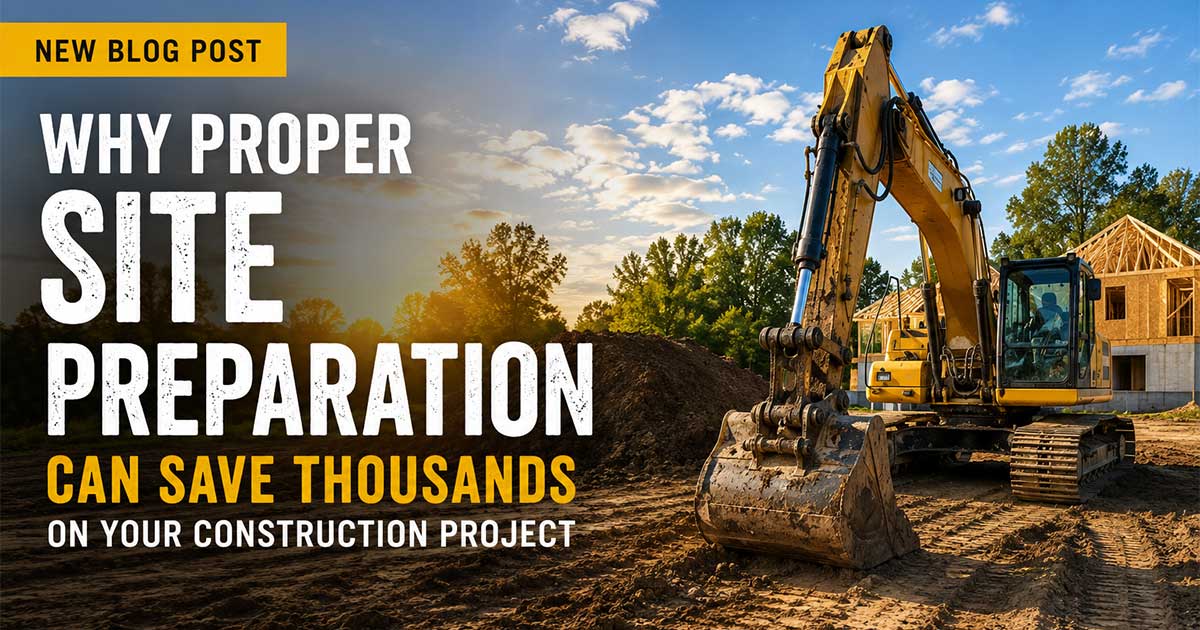
Don’t Build on a Bad Foundation
Site preparation is the foundation of every successful construction project. Proper excavation, grading, drainage planning, and soil preparation help prevent costly delays, foundation settlement, drainage issues, and utility conflicts later in the project. Investing in professional site preparation before construction begins can save homeowners and developers thousands of dollars over the life of a project.
It All Starts Below the Surface
When people think about building a new home, commercial building, or addition, they usually picture the finished structure. What they don’t see is the work happening below ground.
Before concrete is poured or walls begin to rise, the land itself must be properly prepared. The quality of that work determines how well everything above it performs for decades to come.
At Briggs & Martin Co., we’ve spent more than 60 years preparing construction sites throughout Mid-Michigan. We’ve seen firsthand how proper planning and experienced excavation prevent expensive problems that often don’t appear until months, or even years, after construction is complete.
Hidden Problems Can Become Expensive Repairs
Every property is different. Soil conditions, drainage, elevation, underground utilities, and previous site activity all affect how a project should begin.
Without proper preparation, issues can develop quickly.
Poor drainage can direct water toward foundations instead of away from them, increasing the risk of basement leaks, erosion, or premature concrete deterioration.
Improper grading may leave standing water throughout the property, creating landscaping challenges and long-term maintenance issues.
Unstable or poorly compacted soils can eventually settle, leading to cracked foundations, uneven driveways, sidewalks, patios, and structural movement.
Underground utility conflicts are another common concern. Discovering unknown water lines, sewer lines, or electrical services after construction has started often results in costly delays and change orders.
Many of these problems are completely avoidable with experienced site preparation.
The Five Steps of Proper Site Preparation
Every successful project follows a proven process.
1. Site Evaluation
The property is evaluated for drainage, existing elevations, underground utilities, soil conditions, access, and construction requirements before excavation begins.
2. Clearing and Excavation
Trees, brush, debris, and unsuitable soils are removed while the site is excavated to the required elevations for the project.
3. Grading and Drainage
Proper grading ensures water flows away from structures while creating stable working conditions for future construction.
4. Utility Preparation
Water, sewer, septic, storm drainage, and underground utility corridors are installed or prepared before foundations and pavement limit access.
5. Final Compaction
The finished subgrade is properly compacted to provide a stable base for foundations, driveways, parking lots, and other improvements.
Each step builds on the previous one, creating a foundation that supports the entire project.
Common Mistakes We See
Trying to save money by avoiding proper excavation or compaction often results in expensive repairs later. Settlement can damage foundations, flatwork, landscaping, and underground utilities.
Ignoring Drainage
Water always finds the lowest point. If drainage isn’t addressed before construction, correcting it afterward usually requires additional excavation and significant expense.
Hiring Based on Price Alone
The lowest bid isn’t always the lowest cost. Experience, proper equipment, and quality workmanship often prevent problems that would cost far more to fix later.
Underestimating Underground Utilities
Existing water, sewer, gas, and electrical lines require careful planning. Experienced excavation contractors know how to safely work around existing infrastructure while preparing the site for future utilities.
Why Experience Makes the Difference
Excavation is far more than moving dirt.
Every bucket of soil removed affects drainage, stability, elevations, and the long-term performance of the finished project.
For more than six decades, Briggs & Martin Co. has partnered with homeowners, builders, developers, municipalities, and utility contractors throughout Jackson County and Mid-Michigan. Our team understands the importance of accurate grading, safe excavation practices, underground utility installation, and completing projects efficiently without sacrificing quality.
From residential homes to commercial developments and municipal infrastructure, our goal remains the same: prepare every site correctly the first time.
Frequently Asked Questions
Most residential projects are completed within several days, while larger commercial or municipal projects vary depending on site conditions, weather, and project scope.
Can excavation be completed during winter?
Yes. While frozen ground and weather conditions can affect scheduling, excavation and utility work can often continue throughout Michigan winters when conditions allow.
Do you perform grading after excavation?
Yes. Proper grading is an essential part of site preparation and helps ensure proper drainage and long-term site stability.
Do you install underground water and sewer utilities?
Absolutely. Briggs & Martin Co. specializes in underground utility installation, including water mains, sanitary sewer, storm sewer, and related infrastructure.
Build It Right From the Ground Up
Every successful construction project starts with proper site preparation.
Whether you’re preparing a residential building site, commercial development, utility project, or municipal improvement, Briggs & Martin Co. has the experience, equipment, and knowledge to prepare your property safely and efficiently.
The decisions made before construction begins often determine the success of the entire project. Investing in professional site preparation today can prevent costly repairs and delays tomorrow.
Contact Briggs & Martin Co. today for a free estimate and let our experienced team help you build on a solid foundation.
continue reading